
You don’t need to be strong to start—you just need to start to become strong.
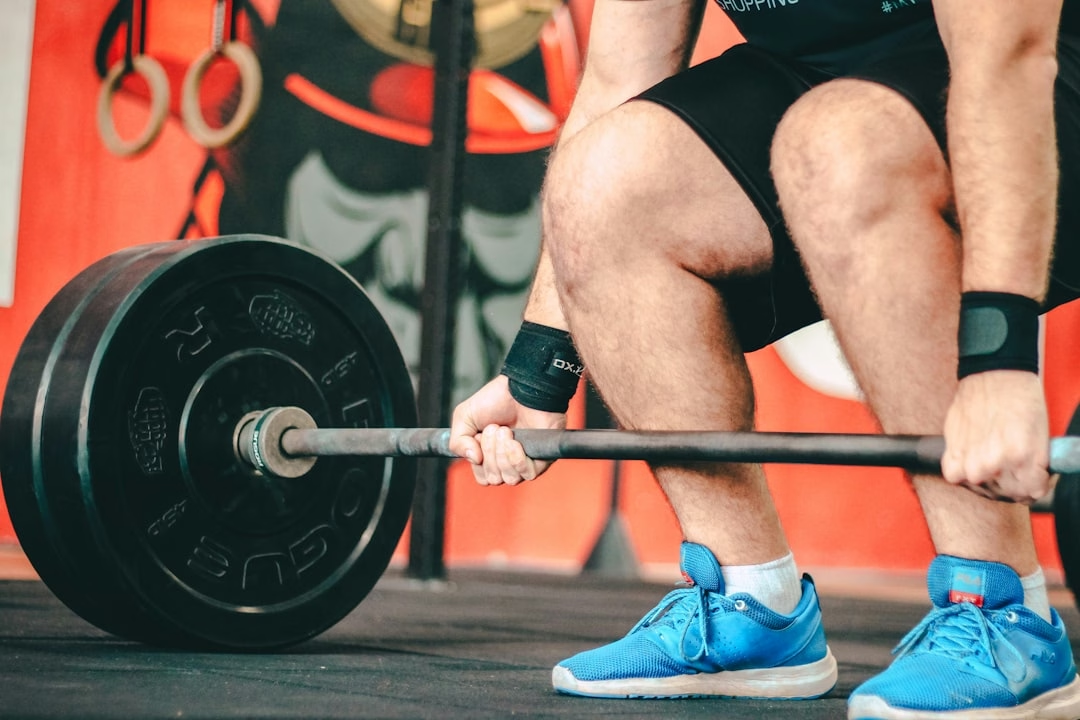
Starting strength training might feel intimidating at first—rows of unfamiliar machines, heavy weights, and not knowing where to begin. But the truth is, every strong person you see today once started exactly where you are. With the right guidance, that uncertainty quickly turns into confidence.
What Is Strength Training?
Strength training, also known as resistance or weight training, involves working your muscles against an external force. This resistance can come from barbells, dumbbells, machines, resistance bands, or even your own body weight. The core principle is to progressively challenge your muscles, forcing them to adapt by becoming stronger and, often, larger over time.
Why Strength Training Matters for Beginners
Starting a strength training routine offers profound benefits that extend far beyond the gym. It is a foundational practice for lifelong health and vitality.
1. Builds Muscle and Bone Density
Strength training is the most effective way to build and preserve muscle mass. After age 30, adults naturally lose 3-5% of muscle mass per decade, a process called sarcopenia. Resistance training is the primary intervention proven to counteract this decline[1]. Furthermore, the mechanical stress of lifting weights stimulates bone formation, increasing bone mineral density and significantly reducing the risk of osteoporosis and fractures later in life[2]. This benefit is crucial for everyone, particularly for women who are at a higher risk of bone density loss post-menopause.
2. Boosts Metabolism and Aids Fat Loss
Muscle is metabolically active tissue, meaning it burns calories even at rest. While the effect is modest—roughly 6-7 calories per pound of muscle per day—it contributes to a higher basal metabolic rate over time[3]. Strength training also creates an “afterburn” effect, scientifically known as excess post-exercise oxygen consumption (EPOC), where your metabolism remains elevated for 24-48 hours as your body repairs itself. Crucially, when dieting for fat loss, strength training helps ensure the weight you lose comes from fat, not valuable muscle tissue.
3. Enhances Mental Health and Confidence
The mental benefits are as significant as the physical ones. Consistent strength training is linked to reduced symptoms of anxiety and depression, improved sleep quality, and better cognitive function[4]. On a personal level, the tangible progress of lifting heavier weights builds a deep, earned confidence that translates into a greater belief in your ability to tackle challenges outside the gym.
The 4 Core Principles That Drive Real Strength Gains
Understanding these foundational concepts will guide your training decisions and ensure your efforts yield results.
1. Progressive Overload
This is the most critical principle in strength training. It means gradually increasing the demand on your muscles over time to force adaptation. For beginners, this is often as simple as adding a small amount of weight each session—for example, adding 5 lbs to your squat. When adding weight every session is no longer possible, you can progress by increasing reps, adding sets, or improving your range of motion. The key is to make each workout slightly more challenging than the last.
2. Compound vs. Isolation Exercises
Exercises are broadly categorized into two types:
- Compound Exercises: These movements involve multiple joints and muscle groups working together. Examples include squats, bench presses, and deadlifts. They are the cornerstone of an effective program because they build functional strength, allow you to lift heavier weights, and are highly efficient.
- Isolation Exercises: These target a single joint and muscle group, like bicep curls or leg extensions. They are useful for addressing specific weaknesses but should not be the focus for beginners.
For those new to beginner strength training, 80-90% of your workout should consist of compound movements.
3. Sets, Reps, and Rest Periods
These variables structure your workout intensity and recovery:
- Reps (Repetitions): The number of times you perform an exercise consecutively. For beginners, a range of 8-12 reps per set is ideal for building both strength and muscle with manageable weight.
- Sets: A group of consecutive reps. Aim for 3 sets per exercise as a starting point.
- Rest Periods: The time taken between sets. For compound exercises, rest 2-3 minutes to allow for full recovery. For lighter isolation work, 60-90 seconds is sufficient.
4. Training Frequency
For optimal results and recovery, beginners should aim to train 3 days per week on non-consecutive days (e.g., Monday, Wednesday, Friday). This full-body frequency provides each muscle group with three growth stimuli per week while allowing ample time for repair and adaptation, which is when muscles actually grow.
8 Must-Do Strength Training Exercises for Beginners
Mastering these eight fundamental movements will build a strong, balanced, and resilient physique. Each trains a critical movement pattern and scales perfectly as you grow stronger.
1. Squat
The barbell squat is the premier lower-body exercise, targeting the quadriceps, glutes, hamstrings, and core. It builds foundational lower-body strength and stability.
- Beginner Tip: Start with just the barbell (45 lbs / 20 kg) or use a goblet squat with a dumbbell. Prioritize depth and control over weight.
2. Bench Press
This is the primary upper-body pushing movement, working the chest, shoulders, and triceps. It establishes a base for all pressing strength.
- Beginner Tip: Always use a spotter or safety pins. Begin with the empty bar and focus on a controlled movement to your mid-chest.
3. Deadlift
The deadlift trains the entire posterior chain—hamstrings, glutes, back, and grip. It is a fundamental movement for building total-body strength and resilience.
- Beginner Tip: Remember, it’s a hip-hinge, not a squat. Keep your back flat throughout the movement; if it rounds, the weight is too heavy.
4. Overhead Press
Also called the military press, this exercise builds strong, functional shoulders while also engaging the triceps and core.
- Beginner Tip: Progress tends to be slower on this lift compared to the squat or deadlift. Be patient and focus on small, consistent weight increases.
5. Barbell Row
This horizontal pulling exercise develops the muscles of the upper and middle back (lats, rhomboids), balancing out all the pressing work.
- Beginner Tip: Avoid using momentum. Pull the bar to your torso with control, squeezing your shoulder blades together at the top of the movement.
6. Pull-Up / Lat Pulldown
Pull-ups are the gold standard for vertical pulling. If you cannot perform one yet, the lat pulldown machine is an excellent substitute that trains the same muscle groups.
- Beginner Tip: Use lat pulldowns to build strength towards your first pull-up. Progress to band-assisted and then negative (lowering-only) pull-ups.
7. Dumbbell Lunge
This single-leg exercise builds unilateral strength in the quads and glutes, improves balance, and helps correct strength imbalances between legs.
- Beginner Tip: If balancing is difficult, start with stationary split squats (where your feet stay in place) to build strength first.
8. Plank
A core stability exercise that strengthens the entire midsection, which is essential for safely performing all other lifts.
- Beginner Tip: Start with 20-30 second holds, aiming to build up to a solid 60-second plank with perfect form before adding difficulty.
Your 8-Week Beginner Strength Training Program
This program uses a simple 3-day-per-week, full-body structure. You will alternate between two workouts—Workout A and Workout B—performed on non-consecutive days (e.g., Monday, Wednesday, Friday).
Weeks 1-4: The Foundation Phase
The goal here is to learn perfect form and build work capacity. Focus on technique, not weight. If your form is solid at the end of a set, add 5 lbs to lower-body lifts and 2.5 lbs to upper-body lifts in your next session.
Workout A
| Exercise | Sets | Reps | Rest |
|---|---|---|---|
| Barbell Squat | 3 | 8-12 | 2-3 min |
| Barbell Bench Press | 3 | 8-12 | 2-3 min |
| Barbell Bent-Over Row | 3 | 8-12 | 2-3 min |
| Dumbbell Lunge | 3 | 8-12 per leg | 60-90 sec |
| Front Plank | 3 | Hold 30-45 sec | 60 sec |
Workout B
| Exercise | Sets | Reps | Rest |
|---|---|---|---|
| Barbell Deadlift | 3 | 8-12 | 2-3 min |
| Overhead Press | 3 | 8-12 | 2-3 min |
| Lat Pulldown | 3 | 8-12 | 2-3 min |
| Dumbbell Lunge | 3 | 8-12 per leg | 60-90 sec |
| Front Plank | 3 | Hold 30-45 sec | 60 sec |
Weekly Schedule: Alternate workouts each session. Week 1: Mon (A), Wed (B), Fri (A). Week 2: Mon (B), Wed (A), Fri (B). Continue alternating.
Weeks 5-8: The Progression Phase
Now that movement patterns are familiar, we increase intensity by adding a set to the main lifts and working with slightly heavier weights.
Workout A
| Exercise | Sets | Reps | Rest |
|---|---|---|---|
| Barbell Squat | 4 | 6-8 | 2-3 min |
| Barbell Bench Press | 4 | 6-8 | 2-3 min |
| Barbell Bent-Over Row | 4 | 6-8 | 2-3 min |
| Dumbbell Lunge | 3 | 8-12 per leg | 60-90 sec |
| Front Plank | 3 | Hold 45-60 sec | 60 sec |
Workout B
| Exercise | Sets | Reps | Rest |
|---|---|---|---|
| Barbell Deadlift | 4 | 6-8 | 2-3 min |
| Overhead Press | 4 | 6-8 | 2-3 min |
| Lat Pulldown | 4 | 6-8 | 2-3 min |
| Dumbbell Lunge | 3 | 8-12 per leg | 60-90 sec |
| Front Plank | 3 | Hold 45-60 sec | 60 sec |
Progression Rules for Weeks 5-8:
- Add 5 lbs to your squat and deadlift each session when you complete all reps with good form.
- Add 2.5 lbs to your bench press, overhead press, and rows each session.
- If you fail to complete all prescribed reps, repeat the same weight next session. If you fail twice at the same weight, reduce the load by 10% and build back up.
Beginner Gym Essentials: What You Actually Need (and What You Don’t)
One advantage of beginner strength training is that you do not need a lot of gear. Here is what is essential versus what is optional.
Essential Equipment:
- Barbell and Weight Plates: A standard Olympic barbell weighs 45 lbs (20 kg). This is the core tool for most compound lifts.
- Squat Rack or Power Cage: This is non-negotiable for safely performing squats and bench presses, especially when training alone. A power cage with adjustable safety bars allows you to fail a lift safely.
- Flat Bench: Necessary for bench pressing and other seated or lying exercises.
- Flat-Soled Shoes: Avoid cushioned running shoes. Opt for shoes with a flat, non-compressible sole like Converse Chuck Taylors, wrestling shoes, or dedicated lifting shoes for maximum stability.
Nice to Have (But Not Required Initially):
- Fractional Plates (1.25 lb / 0.5 kg): These small plates allow for the small, consistent weight increases needed for upper-body progress.
- Lifting Belt: Useful for bracing your core during heavy squats and deadlifts, but learn proper form without one first.
- Resistance Bands: Great for warm-ups, mobility work, and adding variety.
Avoid These Common Strength Training Mistakes (Stay Safe & Progress Faster)
Prioritizing safety and proper technique is what separates consistent progress from setbacks like injury or burnout. As a beginner, avoiding a few key mistakes can dramatically improve your results and keep your training sustainable long-term.
1. Master Form Before Adding Weight
The most important rule in strength training is simple: form comes before weight. Lifting heavier without proper technique not only reduces effectiveness but significantly increases your risk of injury.
Start with lighter weights—or even just the bar—to build correct movement patterns. Focus on control, full range of motion, and stability in every rep. Recording your lifts or seeking feedback from a qualified trainer can help you identify and fix mistakes early.
Only increase the weight when you can complete all reps with clean, controlled, and technically sound form.
2. Don’t Skip Warm-Ups and Cool-Downs
Jumping straight into heavy lifting is one of the most common beginner mistakes. A proper warm-up prepares your body for performance and reduces injury risk.
Begin with 5–10 minutes of light cardio (such as cycling or rowing) to increase blood flow. Follow this with dynamic stretches and movement-specific drills using bodyweight or an empty bar.
After your workout, spend 5 minutes on static stretching for the muscles you trained. This helps improve flexibility, reduce stiffness, and support recovery.
3. Listen to Your Body and Manage Fatigue
Not all discomfort is the same. Mild muscle soreness (DOMS) is normal—especially in the beginning—but sharp, joint, or nerve pain is a warning sign that should never be ignored.
Recovery is where progress actually happens. Aim for 7–9 hours of quality sleep each night to support muscle repair and hormonal balance. Nutrition also plays a critical role. Ensure you’re consuming enough calories and prioritize protein intake—generally around 0.7–1 gram per pound of body weight—to fuel recovery and muscle growth.
Pushing through exhaustion or pain won’t speed up results—it will only delay them. Train smart, recover well, and your progress will follow.
The Bottom Line
Starting a beginner strength training program is an investment in your future self. The journey from your first session to lifting weights you once thought impossible is incredibly rewarding. Remember, consistency is far more important than perfection. Stick to the plan, focus on progressive overload, prioritize your form, and trust the process. The strength, confidence, and health benefits you build in the gym will empower every other area of your life.
Frequently Asked Questions
How many days a week should a beginner do strength training?
Beginners should train 3 days per week on non-consecutive days to allow proper recovery and muscle growth.
How long does it take to see results from strength training?
Most beginners notice strength improvements within 2–4 weeks and visible physical changes within 6–8 weeks.
Should beginners lift heavy weights?
No, beginners should focus on form and technique first, gradually increasing weight as strength improves.
What should I eat before and after strength training?
Before: light carbs + protein (e.g., banana + yogurt)
After: protein-rich meal to support muscle recovery.
What are “newbie gains”?
“Newbie gains” refer to the rapid strength and muscle improvements beginners experience when they first start training.
You May Also Like




Why Trust SuppFactsDaily
At SuppFactsDaily, we focus on facts over buzz—delivering clear, science-backed insights on nutritional supplements, fitness, and overall wellness. Our content is built from credible sources and simplified into practical advice you can actually use.
We keep things honest, beginner-friendly, and up to date, so you get reliable information that helps you make smarter health decisions—without the hype.
Pingback: Boost Male Fertility & Increase Sperm Count Naturally - SuppFactsDaily
Pingback: How to Build Muscle Strength and Power the Right Way - SuppFactsDaily
Pingback: Supplements for Women Over 40: Feel Younger, Stronger & Healthier - SuppFactsDaily
Pingback: 12 Effective Ways to Prevent Blood Sugar Spikes - SuppFactsDaily
Pingback: A Complete Guide to a Sustainable Calorie Deficit for Fat Loss - SuppFactsDaily
Pingback: A Guide to Optimal Protein Intake for Muscle Growth - SuppFactsDaily
Pingback: Creatine for Women: Benefits, Safety & What It Really Does - SuppFactsDaily
Pingback: Plant-Based Protein vs. Whey Protein: Which Is the Best Choice for You? - SuppFactsDaily
Pingback: Creatine for Muscle and Strength: Proven Benefits & How It Works - SuppFactsDaily
Pingback: Beginner Exercise Guide: Start Working Out the Right Way - SuppFactsDaily
Pingback: How to Increase Testosterone With Exercise Naturally - SuppFactsDaily
Pingback: 9 Daily Routines for Healthy Aging That Support Longevity - SuppFactsDaily
Pingback: Sarcopenia: The Essential Guide to Age-Related Muscle Loss - SuppFactsDaily
Pingback: 5 Pregnancy Exercises to Support a Healthy Pregnancy Journey - SuppFactsDaily