Creatine is more than a gym favorite—it’s one of the most researched supplements for building strength and muscle.
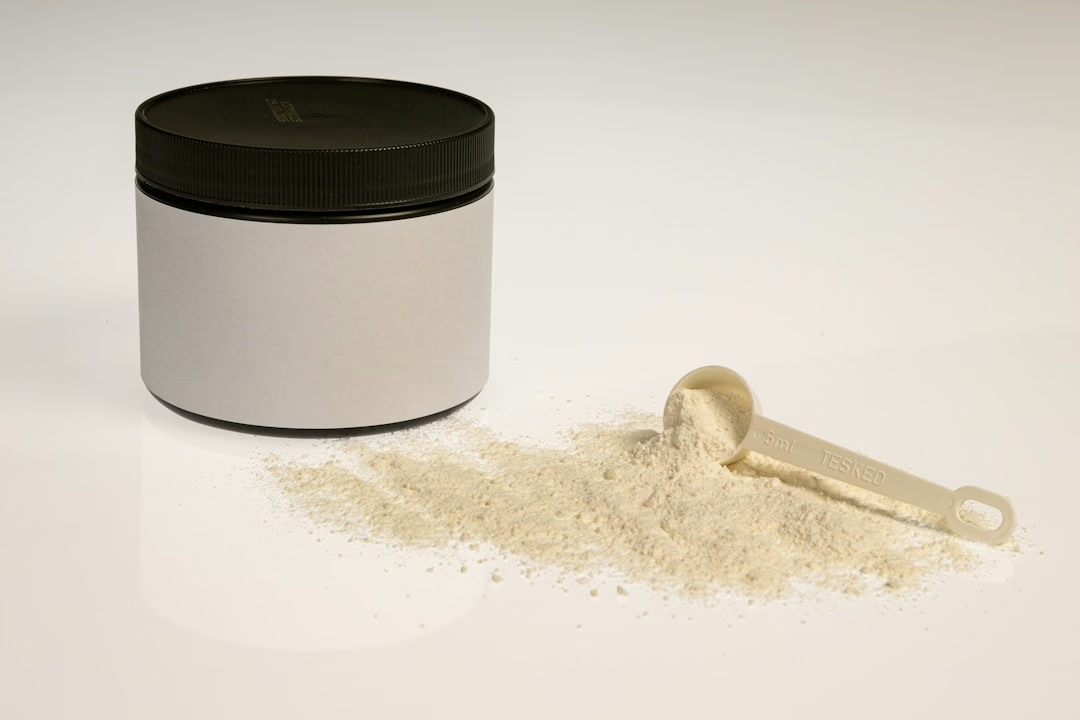
From athletes chasing better performance to everyday lifters working toward their next milestone, its appeal has only continued to grow. But behind the familiar name is a body of research that deserves a closer look, particularly when it comes to creatine for muscle and strength.
Creatine for Muscle and Strength: How It Supports Growth
Creatine monohydrate is widely recognized as the most effective supplement available for increasing lean muscle mass and enhancing physical strength. While it is fundamental in bodybuilding and fitness communities, its benefits extend to anyone engaged in resistance training. Research consistently shows that supplementing with creatine can double your strength and lean muscle gains compared to training alone[1][2][3]. This article explores the science behind how creatine works, its proven effects on performance, and how to use it effectively.Why Creatine Is Worth Understanding
In a market flooded with fitness supplements, it’s critical to focus on ingredients with robust scientific backing. Creatine stands out not just for its popularity, but for the sheer volume of research confirming its safety and efficacy for improving athletic performance and body composition. Knowing how it functions at a cellular level empowers you to use it correctly and maximize your results.How Creatine Works in Your Muscles
The primary mechanism behind creatine’s effectiveness lies in its role in cellular energy production. To understand this, we need to look at two key processes.1. Creatine and ATP: Fueling High-Intensity Exercise
Adenosine triphosphate (ATP) is the fundamental currency of energy in your body’s cells, crucial for metabolism and muscle function. However, your muscles can only store enough ATP for about 8–10 seconds of all-out, high-intensity effort[4]. After this, your body must produce new ATP to continue. Activities like heavy lifting or sprinting demand more ATP per second than your body can naturally produce[5], which is why maximal effort can’t be sustained for long.2. Cellular Changes That Signal Muscle Growth
Beyond energy production, creatine induces several beneficial changes within muscle cells that promote growth[7]. These include:- Cell Volumization: Creatine increases the water content inside muscle cells, causing them to swell. This process is believed to be an anabolic signal that triggers muscle growth[8].
- Increased Anabolic Hormones: It may elevate levels of insulin-like growth factor 1 (IGF-1), a key hormone that stimulates muscle development[9].
- Enhanced Protein Synthesis: These cellular changes activate processes that lead to the creation of new muscle proteins[7][10].
- Reduced Muscle Breakdown: Creatine may help minimize muscle protein breakdown during exercise, leading to greater net muscle retention over time[11].
Proven Creatine Benefits for Strength and Power
By enhancing ATP regeneration, creatine is one of the few supplements repeatedly proven to increase strength and power output[14]. The evidence is compelling across various exercises and athlete levels.1. Measurable Improvements in Strength Metrics
Studies show significant gains in key lifts. One 4-week study reported an 18-lb (8-kg) increase in bench press one-rep max, a 17% improvement in cycling sprint performance, and a 20% greater workload capacity at lower weights[3]. Another 10-week study demonstrated a drastic increase in half-squat power[15].2. Enhanced Performance in Trained Athletes
Research on Division I college football players after 9 weeks of creatine supplementation revealed comprehensive improvements[16]:- Bench press (1 rep max): 5.2% increase
- Power clean (1 rep max): 3.8% increase
- Squat (1 rep max): 8.7% increase
- High-intensity anaerobic peak power: 19.6% increase
- High-intensity anaerobic capacity: 18.4% increase
3. Consistent, Average Gains
A large review of the research concluded that creatine supplementation leads to an average improvement in strength and power of around 5%[17].Creatine for Muscle Growth: The Most Effective Supplement
Creatine is among only a handful of legal supplements proven to directly increase muscle mass when combined with exercise[14]. A review comparing 250 studies on popular muscle-building supplements found that creatine provided the greatest benefit[14].1. Evidence from Clinical Studies
An 8-week study showed creatine increased muscle mass within a training program, improved bench press strength, and reduced levels of myostatin—a protein that inhibits muscle growth[18]. The benefits apply to both beginners and elite athletes. Research on well-trained athletes found creatine added 5.7 lbs (2.6 kg) of muscle mass, increased the bicep curl one-rep max by 24 lbs (11 kg), and boosted the leg press one-rep max by 70 lbs (32 kg)[19].2. Benefits for Women and Body Composition
Creatine is also effective for women seeking to increase strength and tone. One study found women taking creatine experienced a 60% greater increase in lean mass compared to a group that only strength trained[20]. A major review of over 150 studies reported an average 2.2% increase in lean body mass and a 3.2% decrease in body fat percentage among creatine users[21].Choosing the Right Creatine Supplement
While several forms of creatine exist (e.g., creatine hydrochloride, creatine ethyl ester), research indicates they are no more effective than the classic and affordable option: creatine monohydrate[1][22]. Until more conclusive studies are done on newer versions, creatine monohydrate remains the most proven and cost-effective choice.Creatine Safety and Possible Side Effects
Creatine has an excellent long-term safety profile for healthy individuals. The most common side effect is minor water retention within muscle cells, which contributes to the “cell volumization” effect and is not the same as subcutaneous bloating.How Much Creatine Should You Take?
The standard protocol to rapidly saturate muscle stores involves a loading phase, followed by a maintenance dose. However, you can also skip loading and start with the maintenance dose, though it will take longer (3-4 weeks) to see full effects.1. The Creatine Loading Phase
To load, take 20 grams of creatine monohydrate per day, split into four 5-gram servings, for 5–7 days[1]. This quickly elevates muscle creatine levels.2. The Maintenance Dosage
After loading, or if you choose not to load, take 3–5 grams of creatine monohydrate per day to maintain elevated muscle stores[1]. Timing is not critical; taking it daily is what matters.3. Who May Benefit Most From Creatine?
The degree of benefit can depend on your baseline creatine levels, which are influenced by diet. Since creatine is found in foods like red meat, vegetarians, vegans, and those who eat minimal animal protein typically have lower stores and often experience the most dramatic improvements from supplementation[23]. Research shows a wide variation in pre-supplement levels among individuals[23], explaining why a small percentage of people may be “non-responders.”The Bottom Line
Creatine for muscle and strength is backed by decades of research, with creatine monohydrate consistently shown to support muscle growth, strength, power, and high-intensity exercise performance. By helping replenish ATP during intense exercise, creatine can allow you to train harder and support greater gains over time.You May Also Like


Why Trust SuppFactsDaily
Confused by supplements, nutrition advice, and endless health trends? SuppFactsDaily cuts through the noise with clear, science-backed insights on supplements, health, wellness, and nutrition you can actually trust. Every article is built using credible sources like NIH, Cleveland Clinic, and leading medical institutions.
No hype. No guesswork. Just practical guidance to help you make smarter health decisions with confidence.
Image Credits
References
[1] Effects of creatine supplementation on performance and training adaptations
[2] Creatine supplementation enhances muscle performance during resistance exercise
[3] The effects of creatine supplementation on performance and muscle metabolism during sprint cycling
[4] Energy metabolism during high-intensity exercise
[5] Creatine supplementation and exercise performance: recent findings
[6] Muscle creatine loading in men
[7] Potential mechanisms of creatine supplementation for muscle growth
[8] Creatine supplementation increases total body water
[10] Creatine supplementation and muscle protein synthesis
[11] Creatine decreases muscle protein breakdown
[12] Creatine supplementation and training volume
[13] Creatine supplementation and muscle fiber hypertrophy
[14] International Society of Sports Nutrition position stand: creatine supplementation and exercise
[15] Creatine supplementation improves half-squat performance
[16] Effects of creatine supplementation on performance in Division I football players
[17] A meta-analysis of creatine supplementation on strength
[18] Creatine supplementation, muscle mass, and myostatin
[20] Creatine supplementation in women
[21] Creatine supplementation and body composition changes