Nicotinamide Mononucleotide – NMN’s value lies in its ability to support multiple systems at once, rather than targeting a single function.
The study of aging focuses on a single molecule that supports essential processes in the body such as energy production, DNA repair, among others—NAD⁺ (Nicotinamide Adenine Dinucleotide) [4].
With age, the NAD⁺ levels decline significantly—it may drop by up to 45% by age 50 [6]. This decline is strongly linked to a decrease in the energy supply, slower recovery, as well as other physical manifestations of aging. This is where Nicotinamide Mononucleotide (NMN) comes in which is a direct precursor of NAD⁺ [6].
What differentiates NMN from other compounds is its rapid absorption and conversion into NAD⁺[6], making it useful for supporting age-related processes.
NMN cannot simply be defined as a product boosting your energy—NMN acts on a number of physiological systems helping support their optimal function.
NMN is one of the most promising compounds currently under investigation; however, it cannot be viewed as a guarantee of success yet.
Cellular Energy and Repair
- NMN also contributes at a cellular level towards increasing the energy efficiency of your body. It does this by helping improve mitochondrial function, which means that the cells have better functionality and do not lose energy during the process [1][5].
- NMN is also involved in improving the activity of Sirtuins. Sirtuins are proteins which help improve the efficiency of cellular repair and regulating aging through the NAD⁺ pathway [4]. The process cannot occur without the presence of NAD⁺. NMN can help support this pathway [6].
- Additionally, NMN may also be important for supporting DNA repair mechanisms which help prevent damage to cells and DNA [4].
Brain and Cognitive Function
The brain is highly dependent on energy and is sensitive to declines in NAD⁺. NMN can help improve cellular energy, which is critical for focus and clarity, among other functions [5].
Metabolic and Cardiovascular Systemic Synergy
- Recent human studies have shown promising results for NMN’s role in metabolism.
- NMN also supports the health of the endothelium—the inner lining of blood vessels. Healthy endothelial function is essential for proper circulation and overall cardiovascular health.
- Moreover, certain evidence shows that NMN could improve aerobic capacity and thus increase the efficiency of oxygen utilization [3].
- By influencing both lipid and carbohydrate metabolism, NMN may create a broader cardiovascular–metabolic effect.
- Insulin Resistance Management: In clinical research, it is noted that NMN improves muscle insulin resistance, especially among patients with prediabetes [2]. As NMN helps the body process sugars, it may act as a metabolic support, adding to the effects gained from prebiotics for gut health.
- Vascular Endothelial Support: Aging directly impacts the endothelium (the inner lining of blood vessels). By boosting NAD+, NMN may support the production of Nitric Oxide (NO), which relaxes and widens blood vessels. This “vascular resilience” improves circulation and acts as a buffer against high-tension professional stress.
- Physical Recovery and Efficiency: Studies in athletes and older adults show that NMN can increase aerobic power and stamina by optimizing oxygen utilization [3][5]. For professionals balancing heavy workloads and intense training, NMN provides a physiological buffer against post-exercise fatigue.
How NMN Is Typically Used
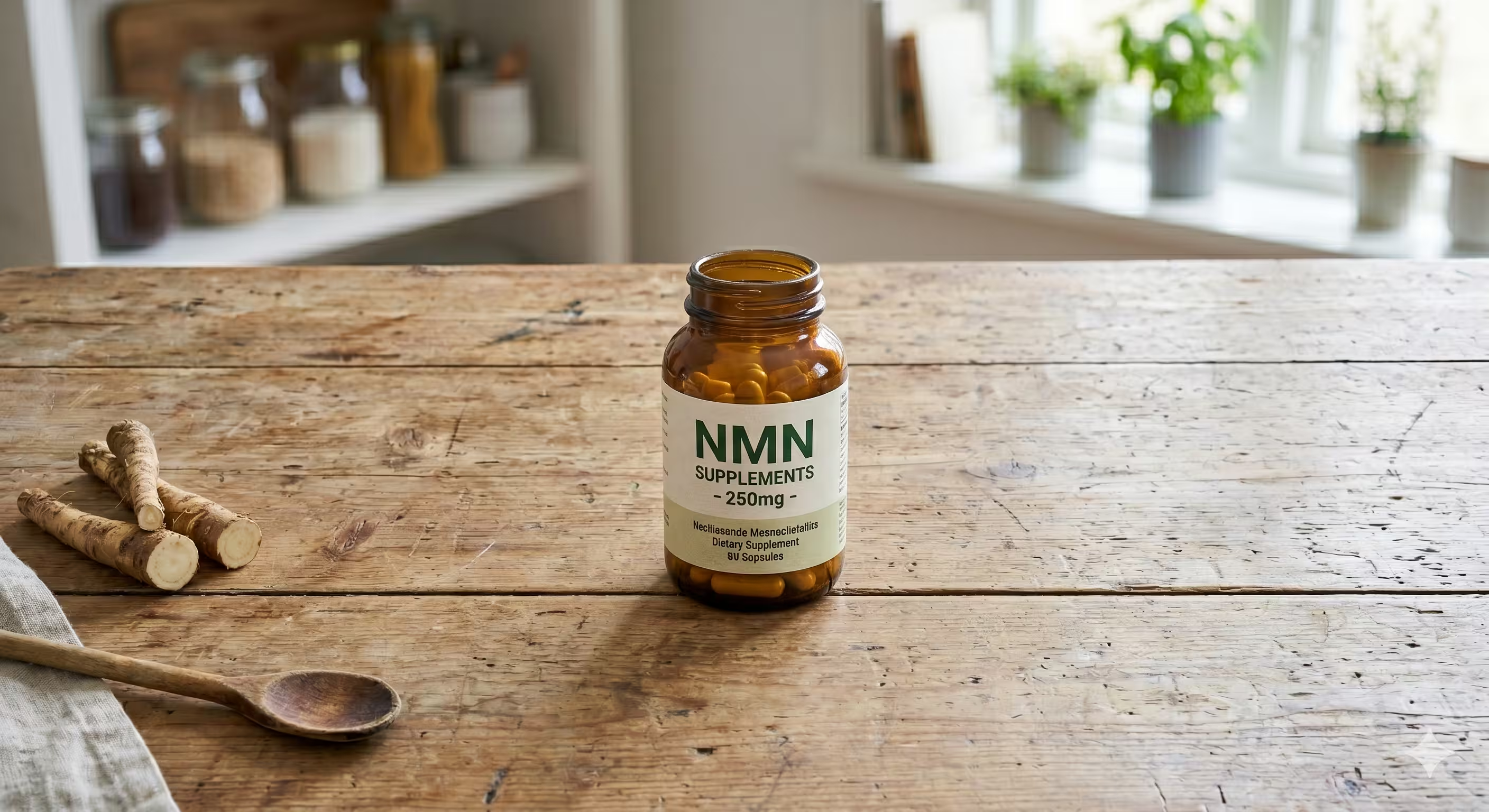
- NMN is used in amounts ranging from 250 mg to 1000 mg daily, with most studies utilizing 500 mg as an approximate point [1][7]. The supplement has rapid absorption and increased NAD⁺ levels can be seen within 30-60 minutes after ingestion [6].
- Regarding safety, no major side effects have been reported in current studies of NMN consumption described in the literature [7]. Nevertheless, it is worth noting that the drug is yet to be proven as a fully reliable pharmaceutical agent.
The Bottom Line
In essence, NMN marks a shift in the traditional approach in supplementing as it is based on fundamentals. By bringing back the normal levels of NAD⁺, NMN can help promote better metabolism and brain functioning.
Nevertheless, NMN should not be seen as a guarantee of longevity. The real strength of NMN comes into play when it plays in the background, helping in routine activities like nutrition and recovery.
References
[1] GeroScience / PMC (2022): The efficacy and safety of β-nicotinamide mononucleotide (NMN) supplementation in healthy middle-aged adults.
- A dose-dependent study confirming that 600mg daily is the optimal dosage for increasing blood NAD+ levels and improving physical walking endurance.
[2] Science / PMC (2021): Nicotinamide mononucleotide increases muscle insulin sensitivity in prediabetic women.
- Definitive proof that NMN enhances the body’s ability to process sugar and improves muscle signaling, directly supporting metabolic health.
[3] JISSN / PMC (2021): NMN supplementation enhances aerobic capacity in amateur runners: A randomized, double-blind study.
- Evidence that NMN improves max and ventilatory threshold by allowing skeletal muscles to utilize oxygen more efficiently during exercise.
[4] Journal of Biological Chemistry (2022): Fueling genome maintenance: On the versatile roles of NAD+ in preserving DNA integrity.
- Details the molecular necessity of NAD+ for PARP enzymes, which are responsible for identifying and repairing damaged DNA strands.
[5] Nutrients / PMC (2022): Effect of 12-week intake of NMN on sleep quality, fatigue, and physical performance in older adults.
- Shows that afternoon NMN intake specifically reduces lower-limb fatigue and improves sleep quality/alertness in older populations.
[6] Integrative Medicine / PMC (2020): The Science Behind NMN–A Stable, Reliable NAD+ Activator.
- Explains the rapid absorption kinetics of NMN and its role as a stable, long-term activator of anti-aging pathways compared to other precursors.
[7] Endocrine Journal (2020): Effect of oral administration of NMN on clinical parameters in healthy Japanese men.
- A landmark safety study confirming that single oral doses of up to 500mg are effectively metabolized by the human body without any toxic side effects.
Pingback: NAD+ Supplements: Can They Really Slow Down Aging? - SuppFactsDaily