Your gut is doing more than you think—and prebiotics are at the center of it. Keep reading to find out why they matter.
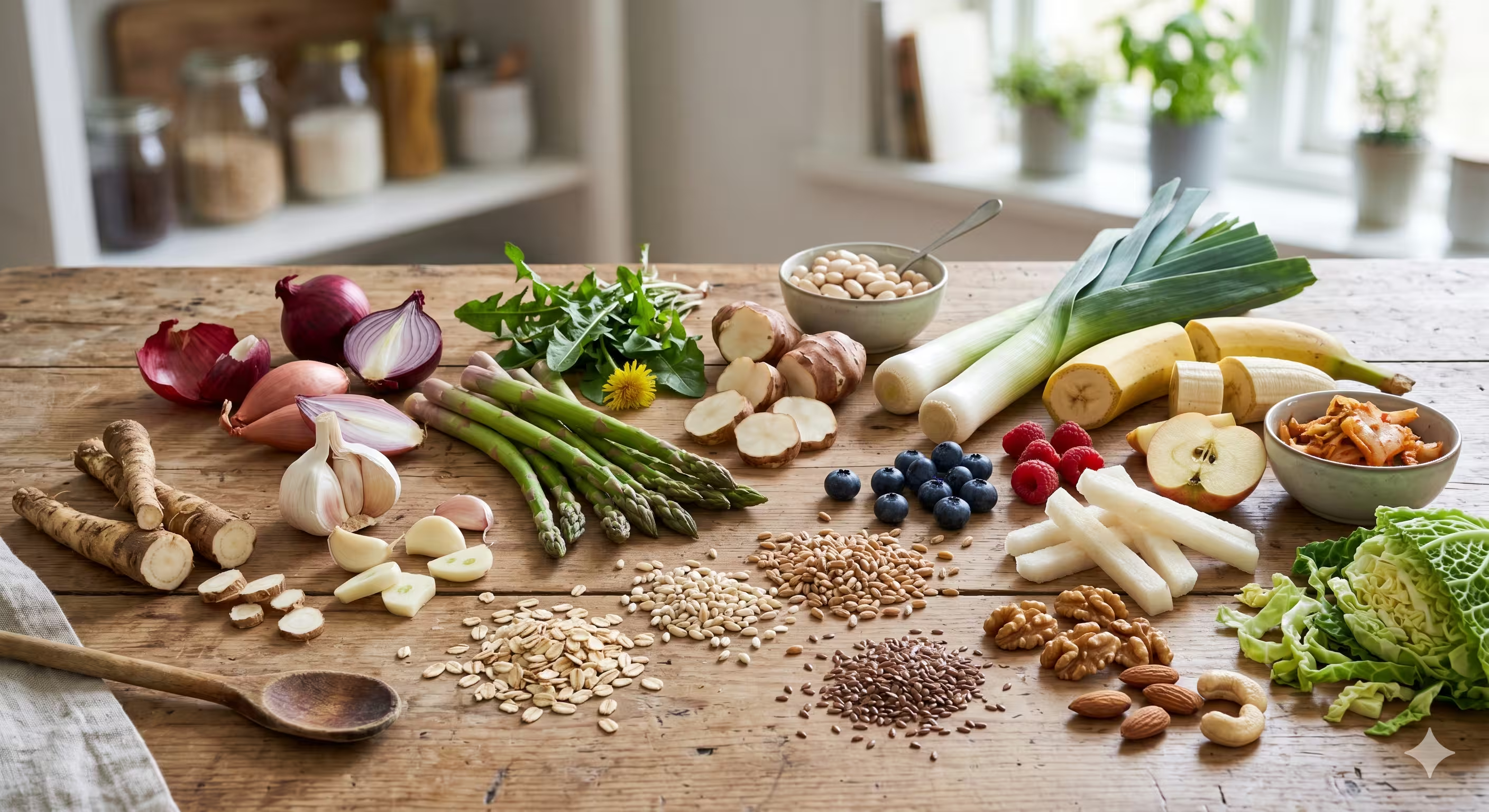
For years, probiotics have been at the centre of the discussion about overall health, as the ‘good’ bacteria people take to help with their digestive system.
But the study of gut in 2026 has provided more foundation for a basic principle: our internal systems (and all of those microorganisms living with us) will be contingent not on the types of ‘seeds’ we grow, but the nature of the ‘soil’ we provide for them.
Prebiotics are specialized non-digestible fibres that are the primary source of fuel for the trillions of bacteria who reside in your gut (and are the workforce that keeps our digestive systems functioning) [1][2].
According to the ISAPP, prebiotics are defined as ‘ingredients that cause specific changes in the composition or activity of the gastrointestinal microbiota’ [1].
They aren’t just fibrous; they work as they act through natural processes in the gut that exert their influence on our brain, heart and immune systems.
The Fermentation Factory: SCFA Synthesis
Prebiotics are not digested in the upper gut and instead reach the colon intact. Once they reach the colon, your resident bacteria begin a process called fermentation, which produces Short-Chain Fatty Acids (SCFAs)—specifically Acetate, Propionate, and Butyrate [1].
- The Butyrate Effect: Butyrate is the primary energy source for the cells lining your colon. It also acts as a “molecular sealant” that protects the gut barrier from “leaky” gut syndrome (gut–related inflammation) [1].
- Systemic Reach: While fiber remains in the gut, these SCFAs enter the bloodstream. They act as signaling molecules that travel to distant organs, including the liver (to regulate fat metabolism) and the brain [1].
The Cognitive Axis: The Gut-Brain Connection
- The Central Nervous System has a physical and chemical connection to the GI system through the vagus nerve, which is referred to as the “Gut-Brain Axis” and Prebiotics influence brain function within this axis [1].
- Cortisol Regulation: Clinical trials using Galacto-oligosaccharides (GOS) have shown a significant reduction in the “salivary cortisol awakening response.” This implies that the right prebiotics can lower the body’s physiological baseline for stress [1].
- Neurotrophic Support: Prebiotics promote the production of Brain-Derived Neurotrophic Factor (BDNF). This protein is essential for the survival of neurons and supports synaptic plasticity, which is the foundation of memory and learning [1].
- Managing Toxin Build-Up: In clinical neurology, prebiotics such as Lactulose are utilized to lower colonic pH. The lowering of the colonic pH “traps” the toxic ammonia in the gut and prevents it from entering into the bloodstream thereby causing cognitive impairment or brain fog [1].
The Immunity Decoy: Pathogen Defense
- Prebiotics provide a defence mechanism for the body by means of a decoy mechanism. Pathogens such as Salmonella specifically search out specific sugar structures on the intestinal wall in order to attach to the intestinal wall.
- The Decoy Strategy: Specific prebiotics (e.g. GOS and Mannose) mimic the sugar structures of the gut lining. When pathogens attach to prebiotic decoys they cannot use them as a means of attaching to gut lining tissue and are therefore flushed out of the digestive tract.
- T-Cell Training: By feeding beneficial bacteria like Bifidobacterium, prebiotics help induce the production of molecules that “train” the immune system to be more efficient. This has been shown to reduce the duration of respiratory infections and improve vaccine efficacy [1].
Metabolic Guard: Lipid and Mineral Balance
- Prebiotics also support cardiovascular function and skeletal strength by affecting the colon environment.
- Mineral Bioavailability: Prebiotics lower the pH of the colon; therefore, the colon is more acidic and has a better absorption of minerals like calcium and magnesium, hence greater available quantity to the body. The increase in Ca and Mg solubility and absorption into the body provides us with a non-pharmaceutical method for improving bone density [1][4].
- Lipid Levels Modulation: Propionate resulting from fermentation acts on the liver to inhibit cholesterol synthesis; several meta-analyses demonstrate that by regularly consuming Fructo-oligosaccharides, we can decrease blood triglycerides on average by 7.5% [1].
Safety and Clinical Precautions
Most importantly, prebiotics should be introduced with a “low and slow” approach.
- The Fermentation Response: Since prebiotics “wake up” your microbiota, rapid introduction may produce bloating and gases [3]. Start with 2.5g to 5g a day, then gradually increase the amount each week [3][2].
- The SIBO Patient Protocol: Patients with Small Intestinal Bacterial Overgrowth (SIBO) should use extreme caution with respect to prebiotics, as they may exacerbate current symptoms by feeding currently trapped bacteria in the small intestine [3]. Patients using prebiotics in these cases must follow a clinical balancing protocol before starting high-fiber prebiotics.
The Bottom Line
Prebiotics are the fundamental components that support our internal health.
The ability of prebiotics to modulate the production of essential fatty acids as well as protect the gut barrier has a ripple effect throughout the entire body that supports immunity, cardiovascular function, and cognitive function.
Prebiotics represent one of the most effective approaches of ensuring a resilient workforce of microbes.
References
[1] PMC / Nutrients (2019): Prebiotics: Definition, Types, Sources, Mechanisms, and Clinical Applications.
A comprehensive review of the production, classification (FOS, GOS, Inulin), and systemic health impacts of prebiotics.
[2] Mayo Clinic: Probiotics and Prebiotics: What you should know.
Clinical distinction between live bacteria and non-digestible fibers, including guidance on the use of synbiotics.
[3] WebMD / Digestive Disorders: Prebiotics Overview: Benefits, Foods, and Supplements.
Practical guidelines on dosage (minimum 5g daily) and safety precautions for patients with IBS or SIBO.
[4] UMass Memorial Medical Center: Prebiotics: What, where, and how to get them.
Dietary implementation strategies, focusing on the bioavailability of inulin and beta-glucans in whole foods.
[5] Cleveland Clinic: What Are Prebiotics? Benefits and Best Sources.
Analysis of resistant starches and pectins, including the “cook and chill” method for retrograde starch development.