In the realm of exercise and metabolism, whey protein is considered a “magic powder,” with the notion that the more you take, the quicker you grow.
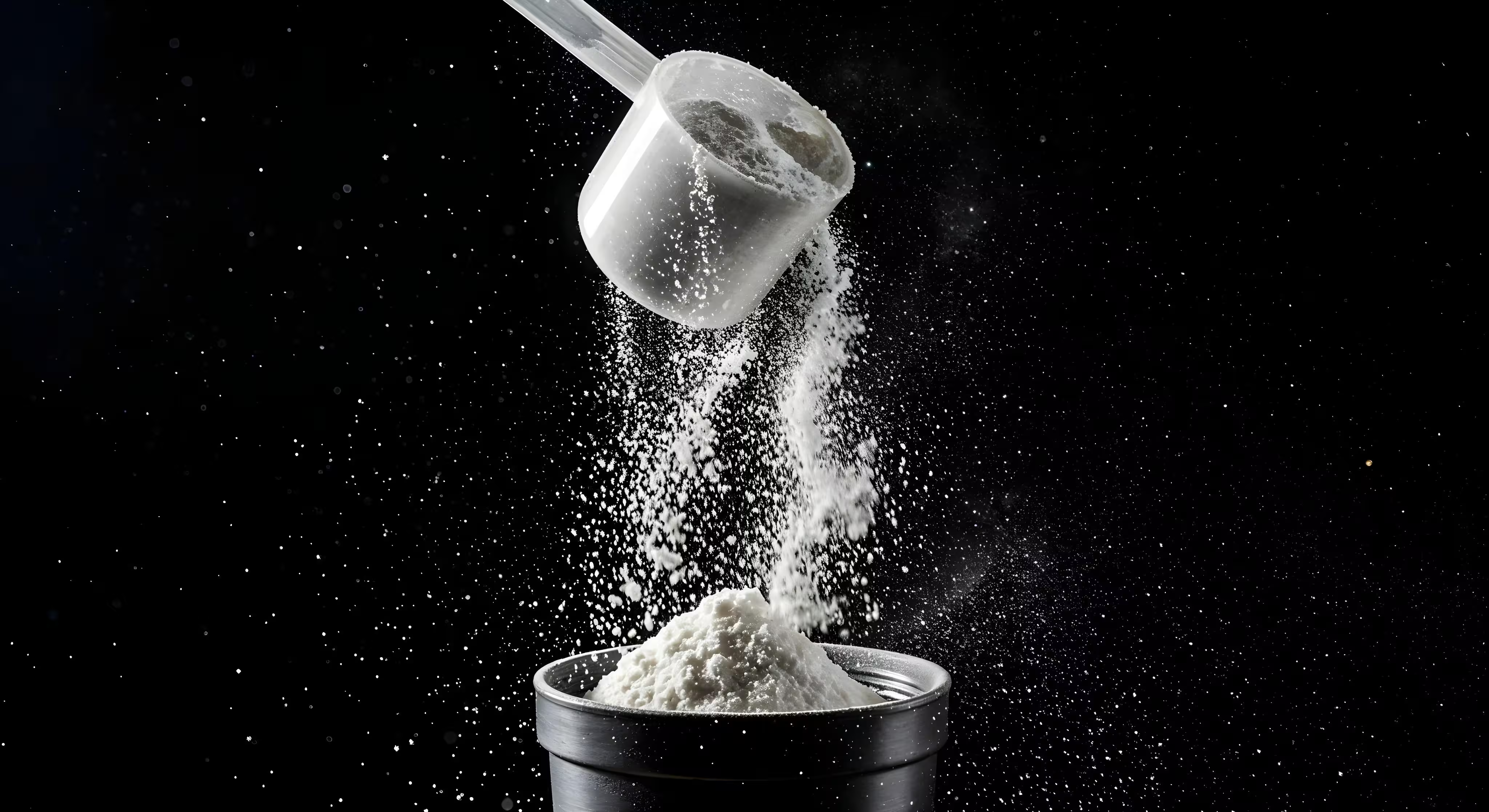
On the other hand, according to clinical evidence, your body does not see whey protein as an endless resource but rather as a highly controlled building process.
Whey protein is widely considered one of the highest-quality proteins due to its completeness (i.e., it contains all nine essential amino acids) [3][7].
In addition to its high-quality content; it also has great bioavailability and large quantities of leucine, which is the initiator (i.e., “on switch”) for muscle protein synthesis (MPS) [4][6].
But the question remains: are you fueling your goals or simply overtaxing your digestive system?
1. The Saturation Point: The "20-40 Gram" Ceiling
One of the common myths is that the body can use an endless supply of proteins during a single meal. Unfortunately, this isn’t true – your body needs a certain amount of proteins to gain maximum muscle protein synthesis [6].
It’s like having an industrial construction site with only one gate for deliveries. No matter how many trucks with bricks you deliver to the gate, the construction workers will unload only what they can handle before the rest start getting in the way.
Based on clinical research, it was discovered that for most adult men, an optimal amount of protein would be around 20-25 grams of whey protein per meal. This amount might go up to 40 grams for the elderly or people who performed an intense body training session [6][4].
2. The Activity Multiplier: Scaling to Your Body
This amount cannot be calculated based on the scoop size but according to your lean body mass and level of physical activity.
- The Sedentary RDA: In case your activity level is low, the RDA is still 0.8g per kg of body mass [1]. Here, protein powder becomes more of a luxury than a necessity.
- The Active RDA: If you participate in resistance training or in some endurance sports, then your needs will be increased up to 1.2g to 2.2g per kg of body mass [4][5].
- Satiety Factor: If controlling your weight is your primary concern, then protein powder is a great way to influence the hormones regulating your hunger [1].
3. The Purity Check: Navigating the "Hidden Dangers"
It is worth noting that all protein powders are not created equal. As reported by Harvard Health, this industry is poorly regulated, hence the following risks [2][9]:
- Toxic Metals: In many protein products, the presence of heavy metals, such as lead, cadmium, and arsenic, was detected [2].
- Hidden Ingredients: Manufacturers usually use maltodextrin or other fillers in order to improve product consistency; however, these substances significantly affect blood glucose [2].
You should consider one important thing: taking several scoops daily may be considered “safe” for kidneys only if they are healthy [4][7].
Otherwise, you will have to deal with a “displacement” issue. When taking 100 grams of whey protein, you deprive yourself of essential micronutrients (e.g., zinc, iron, B12) available when eating whole foods such as eggs, fish, or legumes [1].
Navigating Safety: Digestion and Kidney Health
A widespread misconception is that high protein “destroys” kidneys. In people with good renal health, a higher protein intake does not appear to pose issues [4]. But in individuals who have health problems beforehand, the added nitrogen load poses some problems [4].
- Ease of Digestion: Whey Concentrate has lactose in it. If you suffer from gas, then try Whey Isolate (90% pure protein with minimal amount of lactose) [7].
- Hydration: For proper protein digestion and metabolism, hydration is needed. If you are increasing the number of scoops, then you need to drink more water for nitrogen removal from your body [1].
What Top Sources Say
- Harvard Health: Advises against the consumption of protein powders as total substitutes in a diet because of possible exposure to heavy metals and lack of dietary fiber [2].
- NCBI: States that whey has an important advantage over other types of protein in promoting weight loss and lowering blood pressure [1][4].
The Bottom Line
The optimum “dose” of whey protein is not a number, but a tool in the context of your overall daily needs. For most, one scoop (20-25g) post-workout is the metabolic “sweet spot” [6].
Taking 4 or more scoops daily is typically unnecessary and may cause digestive issues or become boring. Instead of replacing nutrient rich, whole foods, you should use whey protein as a supplement to your regular diet.
Purity first, timing second, and biological “ceiling” last.
References
[1] PMC / Nutrients: Protein Requirements and Muscle Mass: A Review (2024)
[2] Harvard Health Publishing: The hidden dangers of protein powders
[3] ResearchGate / Journal of Food Science: Whey protein: Production, properties, and health benefits
[4] PMC / Journal of the International Society of Sports Nutrition (JISSN): Position Stand: Protein and exercise
[5] British Journal of Sports Medicine (BJSM): A systematic review and meta-analysis of protein supplementation on muscle mass
[6] American Journal of Clinical Nutrition (AJCN): Ingested protein dose response of muscle and albumin protein synthesis after resistance exercise
[7] Cleveland Clinic:Is Whey Protein Good for You?
[8] As It Is Nutrition: Is it safe to take 4 scoops of whey protein per day?
[9] FDA (U.S. Food and Drug Administration): Dietary Supplements: What You Need to Know
Pingback: How to Build Muscle Strength and Power the Right Way - SuppFactsDaily
Pingback: A Guide to Optimal Protein Intake for Muscle Growth - SuppFactsDaily