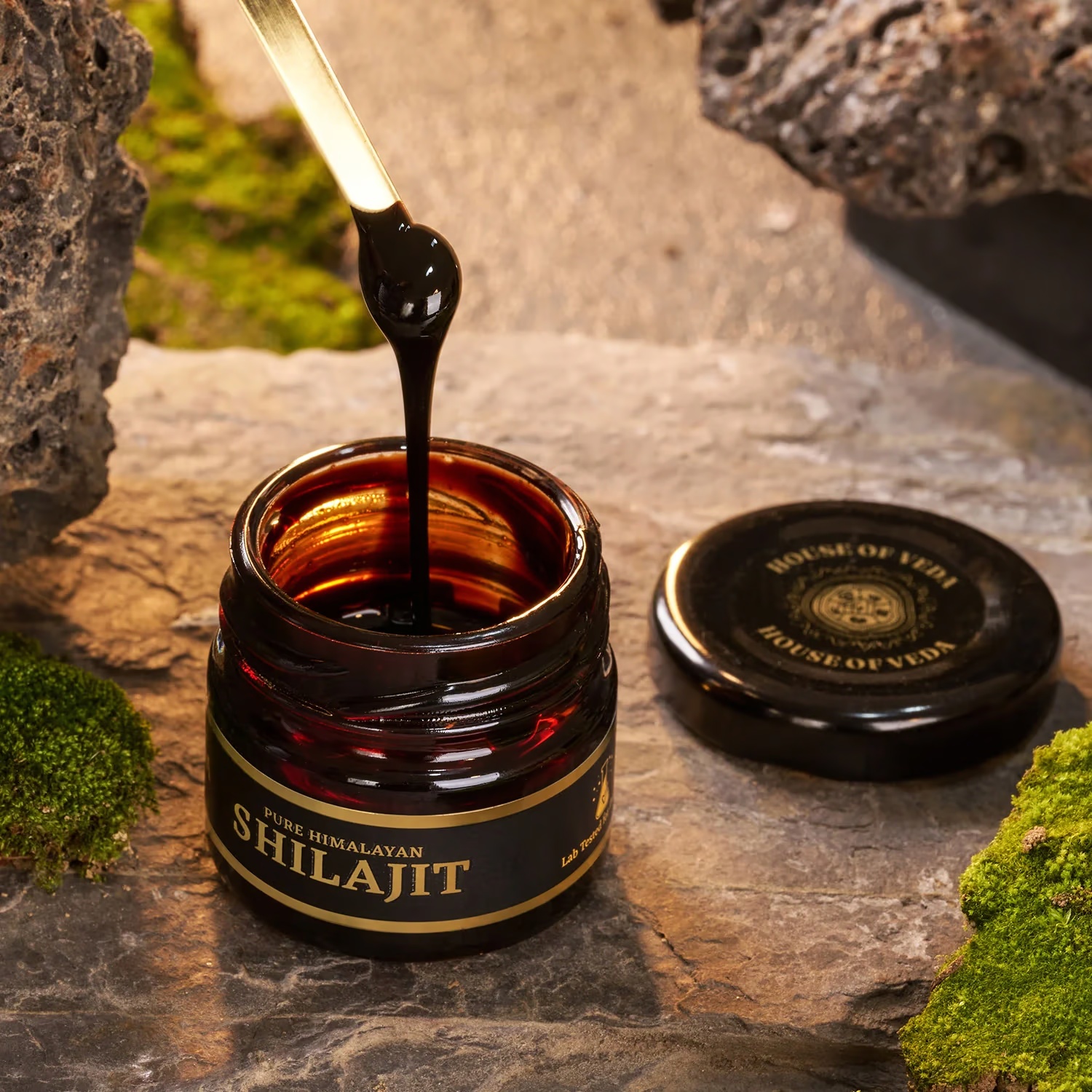
Shilajit, often called the “destroyer of weakness” in ancient texts, has gained massive popularity as a natural supplement. Found in the rocks of high mountain ranges like the Himalayas, this sticky, tar-like substance forms over centuries from the slow decomposition of plant and organic matter.
While it has been used in Ayurvedic medicine for thousands of years, modern research presents a more cautious and nuanced view of its benefits. [2][3][4].
What Exactly Is Shilajit?
Shilajit is a pale to dark brown resin that oozes from mountain rocks, especially during warmer months. It is made up of humus (decomposed plant matter), organic compounds, and minerals. In fact, it contains more than 80 minerals, including iron, zinc, and copper, as well as trace amounts of heavy metals. [3]
Its key active component is fulvic acid, along with humic acid and other bioactive compounds. Fulvic acid plays a major role in transporting nutrients into cells and supporting various bodily functions. [1][2][3]
Why Has It Been Used Traditionally?
In Ayurveda, shilajit is considered a rasayana, a substance believed to improve overall health, longevity, and vitality. Traditionally, it has been used for a wide range of conditions, including:
- Fatigue and weakness
• Digestive disorders
• Urinary and heart problems
• Immune system support
• Sexual health and fertility
Ancient texts even describe it as a “panacea,” meaning a remedy for almost all diseases. However, modern science does not fully support such broad claims. [2][3]
- Fatigue and weakness
What Modern Research Suggests
Recent studies and reviews highlight several possible benefits of shilajit. But it’s important to note that most of these findings are based on small studies, animal experiments, or lab research and not strong human clinical trials. [2]
1. Energy and Fatigue
2. High-Altitude Support
One of the strongest areas of research relates to high-altitude conditions. Shilajit has been shown to help the body cope with:
- Low oxygen levels (hypoxia)
• Fatigue and lethargy
• Insomnia and loss of appetite
• Acute mountain sickness (AMS)
It may improve oxygen transport in the blood, boost energy, and help the body adapt to environmental stress. Because of this, it has been suggested as a supplement for people traveling to high altitudes. [3][4]
- Low oxygen levels (hypoxia)
3. Brain Health and Alzheimer’s Disease
Some studies suggest that fulvic acid in shilajit may help prevent the buildup of harmful proteins (like amyloid and tau) in the brain. These proteins are linked to Alzheimer’s disease.
While this sounds promising, the evidence is still limited to early-stage research and cannot confirm real-world benefits. [2][4]
4. Male Fertility and Testosterone
5. Bone, Muscle, and Recovery
Shilajit may help:
- Strengthen bones and muscles
• Speed up recovery from injuries
• Reduce muscle breakdown, especially in stressful conditions like high altitude
Some research also suggests it may improve bone density in women, particularly after menopause. [4]
6. Iron Absorption and Anemia
7. Immune System and Inflammation
8. Heart Health
Animal studies suggest that shilajit may protect the heart from damage and improve cardiac function. But again, these findings have not yet been confirmed in humans. [4]
9. Other Claimed Benefits
Shilajit has also been studied for:
- Digestive health and ulcer protection
• Stress and anxiety relief
• Antiviral and anti-cancer properties (in lab studies)
• Joint health and pain relief
• Skin and radiation protection at high altitudes
While these claims exist, most lack strong scientific proof. [2][3]
How Does It Work?
Shilajit’s effects are mainly linked to fulvic acid and its mineral content. It may:
- Help transport nutrients into cells
• Support energy production
• Improve blood formation and oxygen delivery
• Aid detoxification
• Maintain balance between energy use and storage
These mechanisms explain why it is often described as an “adaptogen”, a substance that helps the body handle stress. [1][3]
Safety and Risks
Despite being natural, shilajit is not automatically safe.
- Contamination Risks
Raw or unprocessed shilajit can contain harmful substances like:
- Lead, mercury, arsenic, and other heavy metals
• Fungi and microbial toxins
Even some processed supplements have been found to contain unsafe levels of toxins. [2]
- Side Effects
Reported side effects include:
- Nausea, vomiting, and diarrhea
• Headache and dizziness
• Hormonal changes (like increased testosterone)
• Allergic reactions
• Rare cases of serious conditions like high blood pressure and electrolyte imbalance [2][4]
- Who Should Avoid It?
Shilajit may not be suitable for:
- Pregnant or breastfeeding women
• People with heart disease or blood pressure issues
• Individuals with diabetes (due to blood sugar effects)
• Those with iron overload conditions
• People with certain blood disorders
It is also not recommended for children due to lack of safety data. [2][4]
Dosage and Use
The Bottom Line
Shilajit is a fascinating natural substance with a long history in traditional medicine and a wide range of potential health benefits. It shows promise in areas like energy, high-altitude adaptation, and male fertility.
However, modern scientific evidence is still limited, inconsistent, and often based on small or non-human studies. At the same time, concerns about contamination and safety cannot be ignored.
For now, shilajit remains a supplement with potential but not a proven cure-all. Anyone considering its use should do so cautiously and ideally under medical guidance. [1][2]
In simple terms: ancient wisdom praises it, early science explores it — but definitive answers are still missing. [2][3][4]
References
[1] WebMD: Shilajit – Uses, Side Effects, and More
[2 ] Cleveland Clinic: A Quick Introduction to Shilajit
[3]National Library of Medicine : Shilajit: A panacea for high-altitude problems
[4]Healthline: 9 Benefits of Shilajit