Flu season brings a surge of remedies—but one natural option keeps standing out: Elderberry. So, what makes it so popular year after year?
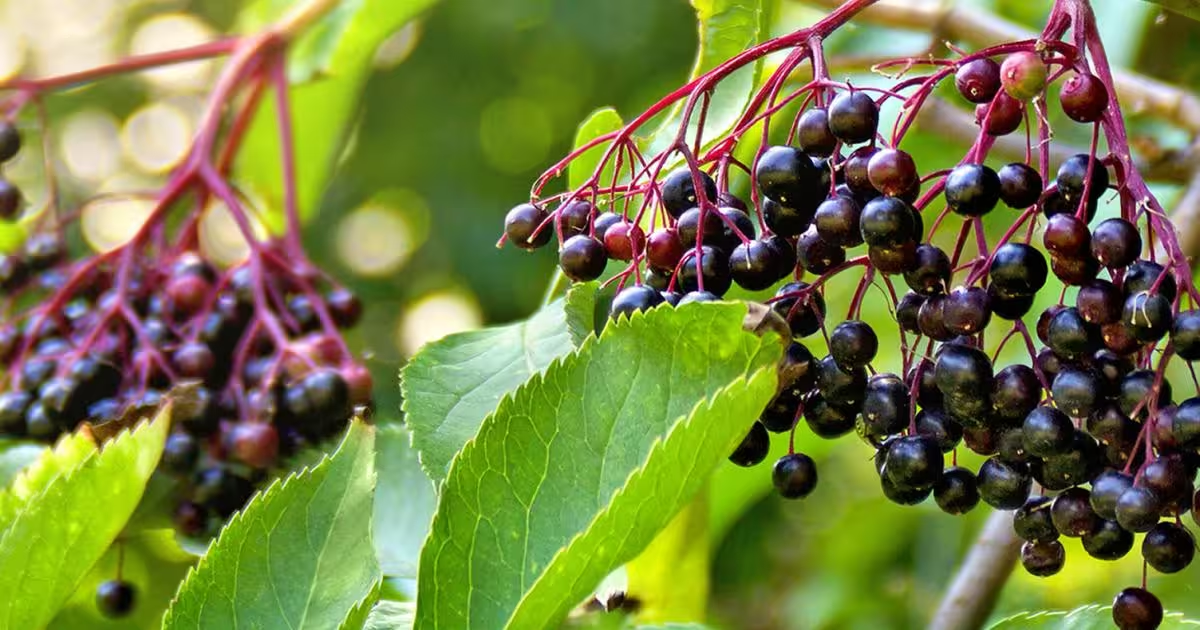
Long before the modern concept of a pharmacy, the European Elder Tree (Sambucus Nigra) has been a staple of folk medicine. In fact, the “Father of Medicine” himself, Hippocrates, called it his “medicine chest“ as early as 400 BC [3].
Native to European lands but now cultivated across the globe, this plant was used by the Native Americans and the Egyptians to treat a variety of ailments from fever to burns. [3]
Elderberry is one of the most common medicinal plants used in the world today. It is a common nutritional remedy for the common cold and flu but still has yet to be proven in the scientific world as to its true value.
What Makes Elderberry Beneficial
1. Relief for Colds and Flu
The best-documented use of elderberry is for the treatment of the flu. Black elderberry extract and flower infusions in liquid, capsule, lozenge, or gummy form may help reduce the severity and duration of the flu. [1] [2]
- The symptom reduction: A clinical trial on people infected with the flu showed that the group taking elderberry syrup got significantly better in a shorter period of time—within 2-4 days—while the control group took 7-8 days. [2]
- Shortened illness: A clinical trial on air travelers showed that the group taking elderberry capsules had a shortened illness period. [1]
While these results are promising, further large-scale human studies are necessary to confirm these effects and determine if elderberries have any potential for preventing influenza.
2. Nutrient and Antioxidant Powerhouse
Elderberries are a low-calorie food packed with critical nutrients. A single cup of fresh berries provides:
- 106 Calories
- 26.7g Carbohydrates
- 10g Dietary Fiber (roughly 36% of your daily value)
They are also incredibly high in vitamin C, providing 52mg per cup—about 57% of the daily value. [5]
3. Potential Heart Health Support
- The characteristic dark black-purple color comes from compounds called anthocyanins [7]. These are strong antioxidants with anti-inflammatory effects. The flowers, leaves, and fruits are all rich sources, with some research suggesting elderberry is a rich source of antioxidants.
- A tip about processing: While all research on raw elderberries has demonstrated powerful antioxidant benefits, other forms of processing (extracting, heating or juicing) will reduce those benefits [7]. Therefore, commercially processed syrups and juices may not provide the same level of benefits as fresh forms.
4. The Antioxidant Advantage:
Animal and human studies indicate that elderberry has beneficial effects on some aspects of heart and blood vessel health [3]:
- Cholesterol & Fat: Studies have shown elderberry juice can reduce the level of fat in the blood and decrease cholesterol.
- Blood Pressure: Rats fed elderberry polyphenols saw reductions in blood pressure, and it may reduce levels of uric acid, which is linked to elevated blood pressure.
- Blood Sugar: Elderberry flowers may inhibit the enzyme alpha-glucosidase, which may help lower blood sugar levels and potentially manage type 2 diabetes—a major risk factor for heart disease. [3]
Further studies in humans are needed to demonstrate if these effects are significant in preventing heart disease.
Other Conditions (Limited Evidence)
Though less supported by extensive human data, elderberry has also been traditionally used for:
- Fever & Rheumatism: Early Indigenous uses.
- Sinusitis and Bronchitis: It has been found to inhibit the growth of harmful bacteria.
- Immune Support: Animal studies show elderberry polyphenols may increase white blood cells.
- Constipation & Headaches: Folk medicine applications.
- Kidney Problems & Joint Pain: Other traditional applications currently lacking strong modern evidence. [3][4]
Critical Safety Warnings: The Dangers of Raw Elderberry
If Consumed Raw:
- Raw or unripe elderberries are known to induce debilitating health problems when ingested, including nausea, vomiting, severe diarrhea, stupor, weakness, numbness, and dizziness. [4][6]
- The risk of poisoning with homemade remedies is greater compared to purified preparations because the toxic compounds of the elderberries can only be removed by cooking.
This is not simply a theoretical risk; there is a documented incident of eight individuals falling victim to improper purification of elderberry juice, resulting in them falling sick after consuming fresh elderberries. [6]
The Issue
RAW (Unprocessed)
COOKED (Purified)
Other Safety Considerations
When it comes to the safety and side effects of elderberry, there are a few important considerations to keep in mind, and you may want to proceed with caution in certain situations.
- First, for those who are pregnant or breastfeeding, there simply isn’t enough comprehensive data yet to confirm that elderberry is safe for these groups, so you might consider holding off on using it until after you have finished lactating. [4][5][3]
- Furthermore, individuals with existing immune problems should be aware that elderberries can stimulate the immune system, and they may react poorly to it [3][5]. It’s also wise to exercise caution if you are taking medications that increase urination (diuretics), as elderberry has its own diuretic effects and can amplify the action of those drugs.
- Finally, keep in mind that while elderberry has many potential health benefits, it should not be relied upon for the prevention or treatment of COVID-19. There is insufficient evidence to know if it can help with symptoms, and it’s always best to follow proven medical advice when it comes to infectious diseases. [4][5]
The Bottom Line
While there is not a single solution to all health issues and therefore there is not a tested recommended medical use for elderberry, elderberry is a nutritious food; it is an excellent source of vitamin C, dietary fiber and contains high levels of antioxidants.
Cooked elderberries can be used as a delicious and nutritious food item as part of a well-balanced meal. However, you should only use elderberry in commercially processed and packaged products by a reputable producer.
Additionally, do not give elderberries to young children or pregnant women unless you have specific permission from a qualified health professional. [4]
While elderberry isn’t a cure, its long-standing use and growing popularity make it a go-to choice for many during flu season.
References
[2] Journal of International Medical Research: Randomized Study of the Efficacy and Safety of Oral Elderberry Extract in the Treatment of Influenza A and B Virus Infections
[3] Harvard Health Publishing: What are the health benefits of elderberry?
[4] National Center for Complementary and Integrative Health (NCCIH): Elderberry Fact Sheet
[5] Cleveland Clinic: What Elderberries Can (and Can’t) Do for Your Health
[6] Morbidity and Mortality Weekly Report (MMWR): Poisoning from Elderberry Juice—California
[7] Food Chemistry: Total Phenolics, Anthocyanins, and Antioxidant Activity of Black Elderberry
Pingback: 12 Effective Ways to Recover From a Cold Faster and Feel Better - SuppFactsDaily