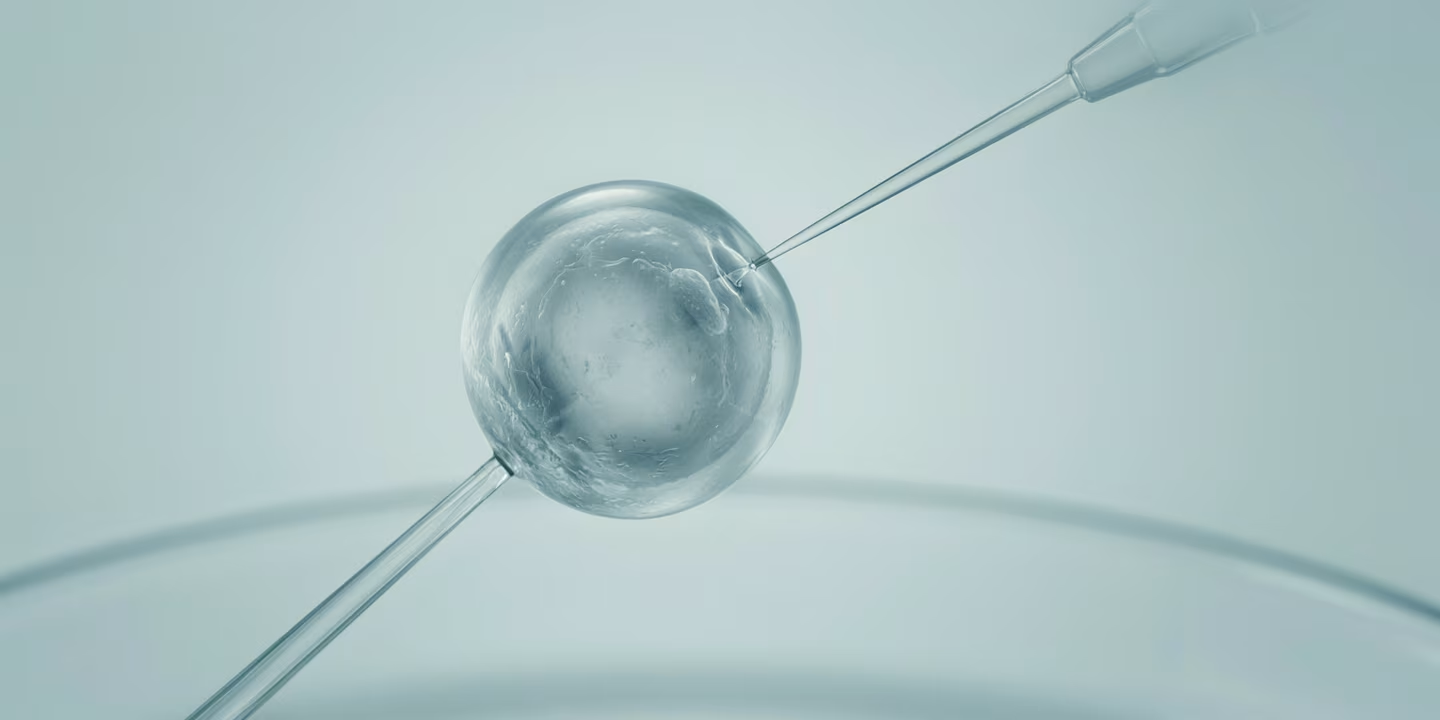
Egg freezing can preserve your eggs for the future, but IVF is where the next chapter begins.
For many people, fertility preservation is about creating possibilities for a future that may not be ready to take shape today. Egg freezing offers one way to preserve those possibilities, while IVF can provide a path for using them later. Understanding how egg freezing and IVF fit into the fertility journey can make the decisions surrounding them feel far less overwhelming.
What is Egg Freezing?
Egg freezing is a fertility preservation treatment that allows you to store your eggs now and use them when you’re ready to grow your family. A typical egg freezing cycle follows a structured process.
1. Pre-Treatment Assessment
Before starting, you will have various tests to assess your fertility potential. Your hormone levels and ovarian reserve—the number of eggs in your ovaries—are reviewed to create a personalized plan.
2. Ovarian Stimulation
You’ll be given medications to stimulate your ovaries to grow multiple follicles, which are sacs containing eggs. Additional medication temporarily prevents ovulation. Your medical team monitors follicle development throughout this phase, which typically lasts 8-10 days.
3. Egg Collection (Retrieval)
After stimulation, you visit your fertility clinic for the egg retrieval procedure. Under sedation, eggs are gently collected from your ovaries. You’ll need someone to take you home afterward.
4. Vitrification and Storage
Suitable, mature eggs are immediately vitrified (flash-frozen) and stored in special cryogenic tanks. There is no time limit on storage, and egg quality does not decrease over time.
Why Consider Egg Freezing or IVF?
Fertility treatment provides options for family building, whether planning for the future or addressing immediate needs. It’s one of the most common types of assisted reproduction—nearly 7000 babies are born through IVF every year in Canada alone[1]. Understanding the processes empowers you to make informed decisions about your reproductive health.
Egg Freezing and IVF: How They Work Together
If you have frozen eggs and are ready to use them, you will work with your fertility clinic to prepare for IVF treatment. The process involves several key steps.
1. Egg Thawing and Fertilization
An embryologist carefully thaws your frozen eggs. The mature eggs are then fertilized with sperm—from a partner or donor—to create embryos. Embryo development is closely monitored in the lab.
2. Embryo Transfer
Once embryos are ready, a quick, non-surgical embryo transfer (less than 10 minutes) is performed. A doctor uses a catheter to place the embryo(s) into your uterus. You then take hormonal medications until a pregnancy test.
3. Pregnancy Test
About 2 weeks after the embryo transfer, a blood test checks for the pregnancy hormone hCG to determine if the transfer was successful.
Egg Freezing vs. IVF: Key Similarities and Differences
While IVF and egg freezing share foundational steps, their goals and timelines differ. The table below outlines the key points.
Similarities
Differences
Both involve taking stimulatory drugs to develop multiple ovarian follicles.
IVF aims for immediate pregnancy. Egg freezing enables pregnancy later using eggs retrieved earlier.
Both involve an egg retrieval. However, if using frozen eggs, you skip this step during IVF.
IVF fertilizes eggs with sperm to create embryos. Egg freezing does not require sperm until later use.
Mature eggs are required for both, as they have the best fertilization potential.
Traditional IVF involves an embryo transfer days after retrieval. With frozen eggs, transfer may occur years later.
Success for both depends on factors like age, medical history, and egg quality.
An egg freezing cycle takes about 2 weeks. An IVF cycle can take upwards of 3 weeks.
Egg Freezing vs. Embryo Freezing: What’s the Difference?
Eggs are reproductive cells (gametes) with half the genetic material needed to create a baby. When fertilized with sperm, an egg becomes an embryo, which has a full set of chromosomes and can implant in a uterus.
1. Timing of Freezing
Eggs are frozen shortly after retrieval. Embryos are typically frozen after 5-6 days of lab culture, once they develop into blastocysts.
2. Survival and Viability
Modern vitrification techniques mean both eggs and embryos have excellent survival rates, making both viable for fertility preservation.
3. Considerations for Future Flexibility
Freezing eggs rather than embryos can keep future relationship and family-building options open. If embryos are frozen with a partner’s sperm and the relationship ends, those embryos may become unusable without the sperm provider’s permission.
Safety, Risks, and Side Effects
Fertility treatments are generally safe but involve medical procedures and medications. Common considerations include:
Ovarian stimulation drugs can cause temporary side effects like bloating, mood swings, or discomfort.
Egg retrieval is performed under sedation, which carries standard anesthesia risks.
The embryo transfer procedure is quick and non-surgical but may involve mild cramping.
Hormonal medications used post-transfer are typically well-tolerated.
A full medical evaluation with your fertility clinic is essential to discuss your personal health history and any specific risks.
Treatment Medications, Timing, and Monitoring
Fertility treatment protocols are highly individualized. Key dosage and timing notes include:
Stimulation Phase: Medications are taken for approximately 8-10 days to stimulate follicle growth.
Trigger Shot: A final medication is administered to mature the eggs 36 hours before retrieval.
Post-Transfer Support: Hormonal medications (like progesterone) are typically continued until the pregnancy test, about 2 weeks after embryo transfer.
Monitoring: Frequent monitoring via blood tests and ultrasounds guides precise medication dosing throughout the cycle.
Embryo Culture: After fertilization, embryos are cultured in the lab for 5-6 days before transfer or freezing.
Sedation: For egg retrieval, sedation is administered by an anesthesiologist.
No Medication for Thawing: When using frozen eggs, you do not need follicle-stimulating medications or another retrieval.
Your fertility specialist will provide a tailored protocol based on your diagnostic tests.
FAQS
Can frozen eggs be used years after they are frozen?
Yes. Vitrified eggs can be stored for future use, and the length of storage itself does not cause the eggs to age. However, the chances of achieving pregnancy depend on factors such as the age at egg retrieval, the number and maturity of eggs stored, and the later IVF process.
How many eggs should someone freeze?
There is no single number that guarantees a future pregnancy. Fertility specialists consider factors such as age, ovarian reserve, reproductive goals, and the number of mature eggs retrieved when discussing whether additional cycles may be appropriate.
Does egg freezing guarantee a future pregnancy?
No. Egg freezing preserves eggs for potential future use, but it does not guarantee fertilization, embryo development, implantation, or pregnancy. Outcomes vary between individuals.
Can you freeze eggs without using sperm?
Yes. Egg freezing preserves unfertilized eggs, so sperm is not needed at the time of retrieval. When you decide to use the eggs, they can be thawed and fertilized with sperm from a partner or donor.
Is egg freezing the same as IVF?
No. Egg freezing preserves unfertilized eggs for potential future use, while IVF involves fertilizing an egg with sperm and creating embryos for possible transfer to the uterus. Frozen eggs can later be incorporated into an IVF cycle.
The Bottom Line
Egg freezing and IVF are interconnected, evidence-based fertility treatments that offer powerful options for family building. Egg freezing preserves fertility potential for the future, while IVF uses those eggs to achieve pregnancy. Both processes involve careful medical supervision, from ovarian stimulation and egg retrieval to embryo transfer.
Success depends on individual factors like age and egg quality. Consulting with a qualified fertility clinic is the best step to understand your options and create a personalized plan.
Confused by supplements, nutrition advice, and endless health trends? SuppFactsDaily cuts through the noise with clear, science-backed insights on supplements, health, wellness, and nutrition you can actually trust. Every article is built using credible sources like NIH, Cleveland Clinic, and leading medical institutions.
No hype. No guesswork. Just practical guidance to help you make smarter health decisions with confidence.