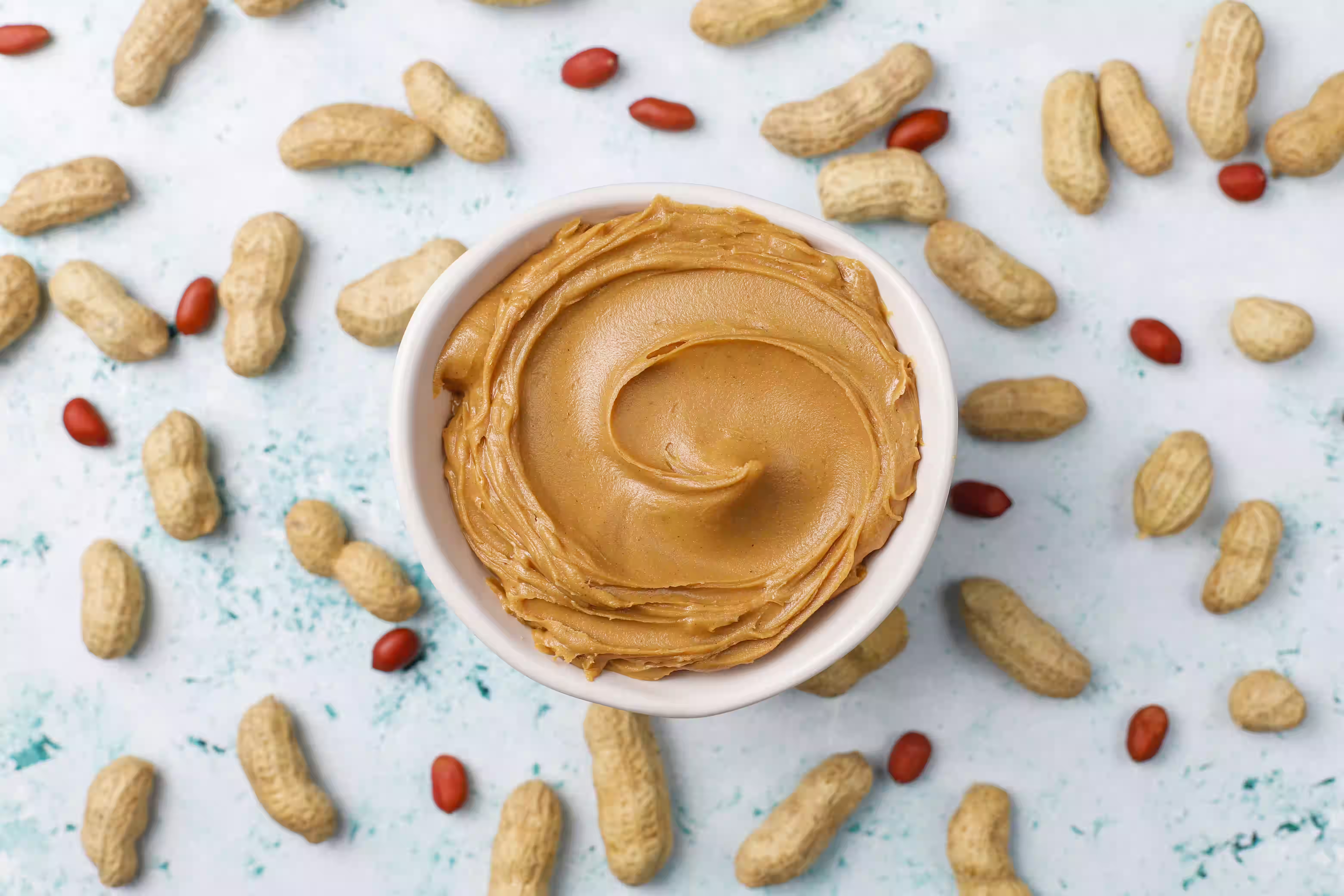
Aging can bring subtle changes in the way we move, balance, and handle everyday tasks. While staying active and eating well are essential, some everyday foods may deserve a closer look for their role in healthy aging. Peanut butter is one familiar staple now attracting attention for what it may offer beyond its familiar taste.
Can Peanut Butter Improve Muscle Power in Older Adults?
A groundbreaking clinical trial from Deakin University in Australia has shown that a simple daily habit of eating peanut butter can significantly improve leg power and sit-to-stand performance in adults aged 65 and older. Over six months, participants who consumed 43 grams of peanut butter daily became faster and stronger without gaining weight, offering a practical and affordable approach to healthy aging.
Why Muscle Power Matters for Healthy Aging
Muscle mass and strength begin declining from around your 40s, accelerating after 50, with lifetime losses of up to 30% in muscle mass and nearly 50% in muscle strength. After 65, physical function can drop by 50% or more from peak capacity, making everyday activities like getting up from a chair or climbing stairs challenging. This decline increases the risk of falls, fractures, and loss of independence, highlighting the critical need for effective nutritional strategies.
How Peanut Butter May Support Muscle Health
1. What the Deakin University Trial Found
Researchers at the Institute for Physical Activity and Nutrition at Deakin University conducted a 6-month randomized controlled trial involving 120 older adults aged 65 and above who were considered at risk of falls. Half were given peanut butter daily, while the other half continued their usual diet. The study was published in the Journal of Cachexia, Sarcopenia and Muscle.
2. Why Muscle Power Declines With Age
Aging leads to a natural decline in muscle mass and strength, often exacerbated by chronic, low-grade inflammation, which is linked to reduced muscle function. This underscores the importance of anti-inflammatory nutrients in the diet.
3. What 43 Grams of Peanut Butter Provides
The daily serving was 43 grams, roughly 1.5 servings of nuts or about 3 tablespoons, providing approximately 250 calories, 10 grams of protein, and 20 grams of fat, with over 90% of that fat being unsaturated.
4. How Researchers Measured Muscle and Physical Function
Over six months, participants underwent various tests to measure physical function and muscle strength:
- Physical Function Tests: 4-metre gait speed (walking speed), standing balance test, Four-Square Step Test (FSST), Five Times Sit-to-Stand (5STS) for time and muscle power, 30-second Sit-to-Stand, and Timed Up and Go (TUG).
- Muscle Strength Tests: Handgrip strength (HGS) and knee extensor strength (KES).
- Body Composition: Weight, BMI, total lean mass, fat mass, and appendicular lean mass.
5. Key Findings: Better Sit-to-Stand Performance and Muscle Power
The peanut butter group showed clinically meaningful improvements:[1]
- Sit-to-stand time improved by 1.23 seconds compared to the control group, a modest yet significant gain, as a one-second decline in this test is linked to reduced daily activity ability.
- Absolute muscle power increased by 22W, while relative muscle power rose by 0.27 W/kg. A gain of 0.2–0.3 W/kg in relative muscle power can move individuals from low to medium or medium to high muscle power categories.
- Low relative muscle power is associated with limited mobility, and improvements are a stronger predictor of long-term independence and survival than peak muscle strength.
- No significant differences were observed in walking speed, grip strength, knee strength, or body composition measures.
6. Why Peanut Butter May Support Healthy Aging
Peanut butter is rich in plant-based protein, vitamins, minerals, fibre, unsaturated fats, and phytochemicals with anti-inflammatory and antioxidant properties. These nutrients help calm chronic inflammation linked to reduced muscle mass and support muscle protein synthesis for repair and rebuilding. Its soft texture also makes it well-suited for older adults with dental issues.
7. The Calorie Paradox: No Weight Gain Despite Extra Calories
Despite consuming an extra 256 calories per day on average from peanut butter, participants showed no significant weight gain or increase in body fat. Researchers attribute this to the high unsaturated fat content, which is more efficiently used for energy and less likely to be stored as fat. Diet quality also improved in the peanut butter group.
8. Why Peanut Butter Was Easy to Follow
Adherence to the daily peanut butter intake was 86%, with high ratings for taste, flavor, and ease of following the plan. This highlights peanut butter as an accessible, affordable, and enjoyable dietary intervention for older adults.
9. Study Limitations and What Researchers Still Need to Know
The study did not show improvements in walking speed or other measures, indicating that peanut butter alone may not address all aspects of physical function. Future research should explore why no weight gain occurred and whether combining peanut butter with exercise could enhance benefits.
Is Peanut Butter Safe for Older Adults?
In the study, no adverse effects were reported from daily peanut butter consumption. It is generally safe and suitable for older adults, including those with dental issues due to its soft texture. However, individuals with peanut allergies should avoid it, and moderation is advised to maintain calorie balance.
How Much Peanut Butter Should Older Adults Eat?
For older adults looking to boost muscle power, the recommended daily intake is 43 grams (approximately 3 tablespoons) of peanut butter. This provides about 10 grams of protein and 250 calories, making it easy to incorporate as a snack or in meals like toast, smoothies, or oatmeal.
The Bottom Line
Daily peanut butter consumption over six months improved sit-to-stand performance and muscle power in community-dwelling older adults at risk for falls, without causing weight gain. Muscle power is crucial for quick movements like standing up or preventing falls, and improving it can enhance independence and mobility. Peanut butter for muscle power in older adults offers a simple, tasty, and affordable strategy for supporting healthy aging.